
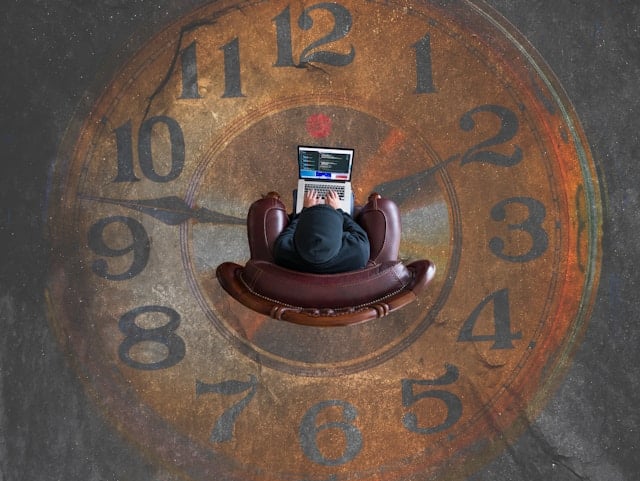
You know how we’re always saying, “I just don’t have time”? For exercise, for reading, for that course we swear we’ll take “one day.” Laura Vanderkam’s talk on time really softened that story for me. It wasn’t a guilt trip. It was more like a kind nudge that said: you’re not broken, but your story about time might be.
She starts with a simple idea: there are 168 hours in a week. That’s a lot more than it feels like when the days blur together. Even if you work 40 hours and sleep 8 hours a night, you still have 72 hours left for everything else. Even at 50–60 work hours, there are still dozens of hours unaccounted for. We often overestimate how busy we are and underestimate how much time we actually have.
Time Is Elastic
Laura shares a story about a woman whose water heater burst and flooded her basement. Across a few days, the cleanup took seven hours—plumbers, calls, dealing with the mess. If you’d asked her at the start of the week, “Can you find seven hours to train for a triathlon or mentor people?” she probably would have said, “No way, I’m too busy.” But when the heater broke, those seven hours appeared.
That’s her big point: time is elastic. It stretches to accommodate what we decide is non-negotiable—our “broken water heaters.”
We can’t make more hours, but we can choose what fills them.
“I Don’t Have Time” vs “It’s Not a Priority”
One of the most comforting but confronting ideas she shares is about language. Instead of saying, “I don’t have time,” she suggests saying, “It’s not a priority,” and noticing how that feels.
So:
- “I don’t have time to exercise” becomes “Exercising is not a priority.”
- “I don’t have time to see the doctor” becomes “My health is not a priority.”
Sometimes that will feel fine—and that’s honest. Other times, it will sting, and that sting is useful. It reminds us that time is, at least partly, a choice, even if the choices are hard.
Start from the Life You Want
Rather than shaving seconds off errands or multitasking our way through the day, Laura suggests starting from a different place: the life you want to look back on.
She recommends:
- Imagine it’s the end of next year and it’s been an amazing year at work. What 3–5 things did you do to make it so?
- Do the same for your personal life—like writing next year’s “family holiday letter” in advance, describing what you wish you’ll have done.
Those answers become your real priorities—usually 6–10 meaningful goals, not a hundred vague wishes. Then you break them into small, doable steps: sign up for the 5K, schedule the first interview for your family history, set a date night, book the class.
Put the Important Things In First
The gentle but practical part is how to protect those priorities. Laura suggests taking a little time each Friday afternoon—a low-pressure moment—to look ahead at the next week. Make a short list under three headings: career, relationships, self. Then deliberately place one or two small actions for each into specific time slots.
It might look like:
- Career: 30 minutes on that long-term project.
- Relationships: breakfast with your partner or a call to a friend.
- Self: a walk, a book, a quiet coffee alone.
She calls this treating your priorities like that broken water heater: they go into the schedule first, and everything else arranges itself around them.
Using “Bits of Time” for “Bits of Joy”
Instead of letting spare moments dissolve into scrolling or random emails, she invites us to use little pockets of time for small joys—reading something you love on the commute, a few minutes of prayer or meditation, or a simple shared meal at a different time if dinner doesn’t work.
Her message isn’t that you should suddenly become hyper-productive. It’s softer than that: even in a full, messy life, there is time for what truly matters to you. When you’re clear on what those things are, and you give them a place on your calendar, time has a way of gently rearranging itself around them.
You’re not behind. You’re just one small choice at a time away from building the life you actually want in the time you already have.